
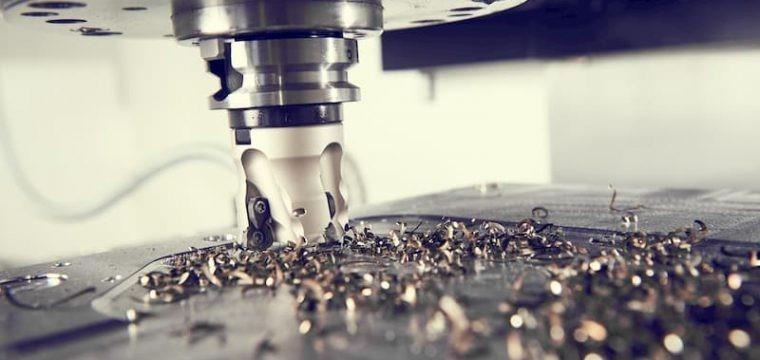
Burrs and chatter are common issues when CNC milling brass and copper due to their softness and ductility. The surface finish, dimensional accuracy, and overall quality of the machined parts could all be negatively impacted by these defects. To prevent burrs and chatter, consider the following strategies:
- Optimize Cutting Parameters: Choose the appropriate cutting parameters based on the specific copper or brass alloy that needs to be machined, including feed rate, spindle speed, and depth of cut. Reduced feed rates, slower cutting speeds, and smaller cut depths can all help to reduce chatter and burr formation.
- Select the Right Cutting Tools: The correct geometries and coatings on high-quality, sharp carbide cutting tools are essential when machining copper and brass. When comparing high-speed steel tools with carbide tools, the former exhibits greater resistance to wear and chipping.
- Effective Coolant Application: To reduce friction and release heat efficiently, use the proper coolant in the cutting zone. Proper coolant selection and application can prevent burr formation, chip welding, and tool wear.
- Rigid Workpiece Fixturing: Verify that the workpiece is correctly fixtured and clamped to prevent vibration and chattering. Tight clamping limits the movement and deflection of the workpiece, allowing for more precise machining and a decreased chance of burrs and chatter.
- Toolpath Optimization: Optimize toolpaths to minimize abrupt changes in tool engagement and direction. Smoother toolpaths reduce stress on the cutting tool and workpiece, which minimizes vibration and burr formation.
- Regular Tool Maintenance: When cutting tools become dull or damaged, replace them or sharpen them to ensure proper maintenance. Broken or worn tools can result in vibration, burr formation, and higher cutting forces.
- Post-Processing Operations: If necessary, consider post-processing techniques such as deburring or finishing to remove any remaining burrs and improve the machined parts' surface smoothness.
By implementing these techniques and closely observing the machining process, manufacturers can successfully prevent burrs and chatter and guarantee the production of superior brass and copper parts with smooth surface finishes and consistent dimensions.

 Arabic
 French
 Spanish
 Portuguese
 Deutsch
 Turkish
 Dutch
Dutch
 Italiano
 Russian
 Romaian
 Portuguese (Brazil)
 Greek
Greek